
One in five adults over 45 has osteoarthritis of the knee, and one in nine has it in the hip (Arthritis UK). Nearly two-thirds of people over 65 report living with chronic pain day to day. If you’re one of them, the shoes in your hallway are doing more work than you’d think, for better or worse.
Most people shop for shoes on looks first and comfort second, then wonder why their knees ache after a shopping trip or a walk round the block. It doesn’t have to be that way. There’s real evidence on what actually helps, and it isn’t always the shoe with the thickest sole.
Here’s what the research says, and what to look for next time you’re buying.
Key Takeaways
- 1 in 5 adults over 45 has knee osteoarthritis, and 1 in 9 has hip osteoarthritis (Arthritis UK)
- Supportive shoes with the right insole reduce joint loading and pain, not just cushioning alone (Journal of the American Geriatrics Society, 2026)
- A wide, deep toe box matters as much as sole thickness for anyone with bunions, swelling or hammer toes
- Properly fitted shoes are one of the simplest, best-evidenced ways to reduce fall risk in older adults
How Common Is Knee and Hip Pain After 65?
Around 8.5 million people in the UK live with osteoarthritis, and it’s the most common form of arthritis by a wide margin (Arthritis UK). Knee osteoarthritis affects roughly 1 in 5 adults over 45, and hip osteoarthritis affects about 1 in 9 in the same age group. Nearly two-thirds of over-65s report chronic pain of some kind, and joints carrying your body weight all day are usually first to feel it.
None of that means you’re stuck with it. What you put your feet in every day is one of the few things entirely within your control, and it makes a measurable difference.
What Actually Helps: Cushioning or Support?
A 2026 review in the Journal of the American Geriatrics Society found that supportive shoes and the right insole reduce joint loading and pain in older adults, and that properly fitted footwear improves mobility, comfort and fall prevention. Cushioning alone isn’t the whole story. A shoe with a thick, soft sole but no structure can let the foot roll and twist, which puts more strain on the knee and hip, not less.
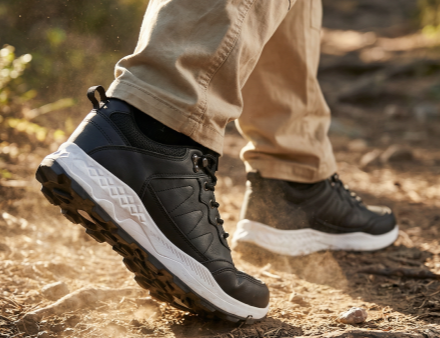
Worth knowing: A firm, supportive midsole that holds its shape does more for your joints than a soft one that compresses flat within a few months. If you can twist a shoe in half with your hands, it probably isn’t giving your feet much support either.
What Should You Look For in a Shoe?
Four things matter more than brand or style. A firm, moderately cushioned insole that evenly distributes weight across the heel, arch and ball of the foot. A wide, deep toe box that gives your toes room to sit flat, rather than curling or overlapping. A slip-resistant sole with real tread, not a smooth fashion finish. And a secure fastening, whether that’s laces, touch-fasten straps or an elasticated gusset, that holds the shoe firmly without needing to be done up painfully tight.
Arch support matters too, particularly if you’re on your feet for long periods. Good arch support stops the foot rolling inward with every step, which is exactly the kind of repeated small strain that adds up in a knee or hip over months and years.
Are Wide-Fit Shoes Worth It?
Feet change shape with age, and swelling from long periods standing, warm weather or simply getting older is common. A standard-width shoe that fitted fine five years ago can end up pinching, and a pinched foot changes how you walk to compensate, which shifts strain onto the knee and hip on that side.
Doctor Keller shoes are built in wide and extra-wide fittings specifically for this. A wider fit accommodates natural swelling through the day without constricting circulation, and a deep toe box gives room for bunions or hammer toes without pressure points that change your gait.
What About Slippers and House Shoes?
A lot of joint strain and a good number of falls happen indoors, in slippers that offer no support at all. Backless slippers or ones with a soft, collapsing sole force the foot to grip and claw to stay on, which is exactly the wrong kind of movement for a sore knee or hip. A proper house shoe with a firm sole and a back or strap that holds the heel in place gives the same support indoors that a good outdoor shoe gives on the street.
Real-world note: The shoes that cause the most joint trouble aren’t usually the smart ones worn for a few hours. They’re the old, collapsed slippers worn round the house for six hours a day, every day, because they’re comfortable in the moment even though they’re doing no real work.
Five Things to Check Before You Buy
- Try both shoes on, standing up. Feet swell through the day, so shop in the afternoon rather than first thing in the morning if you can.
- Check the toe box with your toes spread naturally. There should be room to wiggle them without the upper pressing in from the sides.
- Press the sole with your thumb. It should give slightly, then hold its shape. A sole that compresses flat and stays flat won’t support you for long.
- Walk on a hard floor, not just carpet. Grip and stability show up differently on tile or lino than on a shop’s soft flooring.
- Replace shoes when the sole wears unevenly. An uneven wear pattern changes how your foot lands with every step, and that strain travels straight up to the knee and hip.
Ready to Find Shoes That Actually Support You?
Jolliman stocks Doctor Keller footwear in wide and extra-wide fittings, built with a firm supportive sole, a deep toe box and secure fastenings designed for exactly this. Browse the full range and find a fit that works with your feet, not against them.
Jolliman men’s footwear · Doctor Keller wide-fit shoes
Frequently Asked Questions
Do wide-fit shoes actually help with knee and hip pain?
Yes, indirectly. A wide fit stops the foot being squeezed out of its natural position, which keeps your gait even and avoids the compensating movements that put extra strain on the knee and hip. It’s particularly useful for feet that swell through the day.
Is cushioning or support more important for joint pain?
Support matters more. A 2026 review in the Journal of the American Geriatrics Society found that supportive shoes with the right insole reduce joint loading and pain, while cushioning alone, without structure, can let the foot roll and add strain rather than reduce it.
How often should I replace my everyday shoes?
Most everyday shoes need replacing when the sole shows uneven wear, typically every 8 to 12 months for daily use. Check the wear pattern on the sole regularly. Uneven wear changes how your foot lands and passes that strain up to the knee and hip.
Are slippers bad for joint pain?
Backless or soft-soled slippers can make joint pain worse, because the foot has to grip to keep them on, which is the wrong kind of repeated movement for a sore knee or hip. A supportive house shoe with a firm sole and a proper back gives the same benefit indoors as a good shoe does outside.
What’s the single most important feature in a shoe for joint pain?
A firm, supportive sole that holds its shape, combined with a wide enough toe box that toes sit flat rather than curling. Together, these keep the foot in a stable, natural position, which is what actually reduces strain on the knee and hip over time.
In Summary
Joint pain after 65 is common, but the shoes you choose are one of the few things you can genuinely control. Look past the cushioning and check for real support: a firm sole that holds its shape, a wide enough toe box, good arch support and a secure fastening.
A wide fit isn’t a compromise. For feet that swell or change shape with age, it’s often the difference between a shoe that helps and one that quietly makes things worse.
Nearly two-thirds of people over 65 live with chronic pain (Arthritis UK). The right shoes won’t fix that on their own, but they’re a genuinely useful place to start.
Leave a Reply
You must be logged in to post a comment.