
Colder winter weather brings roughly a 30% rise in deaths, and the over-60s are the group most at risk, largely because the body’s ability to regulate its own temperature weakens with age (public health research on cold weather and mortality). Cold also raises blood pressure and the risk of chest infections, which is why staying properly warm outdoors isn’t really about comfort. It’s one of the more useful things you can do for your health from October onwards.
The usual response is one big coat. The trouble with one big coat is it’s either right or it’s wrong: too warm on the walk to the shops at midday, not warm enough standing still at the bus stop at nine in the morning. Layering solves that, and done properly it doesn’t mean looking three stone heavier than you are.
Here’s how to build an autumn wardrobe that adjusts through the day instead of fighting it.
Key Takeaways
- Colder weather is linked to a 30% rise in deaths among over-60s, who are most vulnerable to cold due to age-related changes in temperature regulation
- Over 3 million UK adults aged 65+ are worried about affording to stay warm this winter (Age UK)
- Three thin layers trap more warm air than one thick jumper, and pack away easier when the day warms up
- Brushed thermal polyester wicks moisture away and dries fast; cotton absorbs sweat and turns cold and clammy the moment it’s damp (Nail the Trail, 2025)
Why Bother Layering Instead of Just Wearing a Big Coat?
October is the UK’s most changeable month, and this year’s seasonal outlook is no exception: models point to a milder autumn overall, but with average daytime temperatures still falling from around 15–16°C at the start of the month to 10–12°C by the end, and an increasing chance of storms from mid-month onwards (The Weather Outlook, 2026).
A single coat can’t cover that range. Layering can, because each layer traps a thin cushion of warm air next to the one below it. More of these thin air pockets insulate better than one thick barrier, and you can shed or add a layer as the day actually changes around you, rather than sweating through lunch in a coat built for the morning frost.
What Should Go Next to Your Skin?
Brushed thermal polyester is the practical choice for a base layer, and it’s not a compromise pick. Polyester absorbs almost no moisture, wicking sweat away from the skin instead of holding onto it, and dries out fast if it does get wet. Cotton does the opposite: it soaks up moisture and stays damp, which is exactly what turns a base layer cold and clammy the moment the temperature drops or the wind picks up.
That matters more than it sounds. A quick dash to the car in the rain, or working up a bit of a sweat carrying shopping, is enough to leave a cotton base layer cold and clammy for the rest of the outing. A thin brushed-thermal layer next to the skin shrugs that off, dries out on the move, and keeps performing all day.

Worth knowing: You don’t need a thick thermal vest to get the benefit. A lightweight brushed-thermal long-sleeve top, thin enough to disappear under a shirt, does more for genuine warmth than a bulky cotton thermal that only fits under one jumper.
Jolliman men’s thermal and fleece collection
What’s the Best Middle Layer for Warmth Without Bulk?
This is where most autumn wardrobes go wrong. The instinct is one thick jumper. The reality is that two thinner layers, a fine-knit poly-cotton or fleece jumper over the base layer, trap more warm air between them than a single heavy one and sit far less bulky under a coat.
A lightweight fleece half-zip or a classic poly-cotton crew neck both work well here. The half-zip has the edge on adjustability: pull it down on a mild afternoon without taking the whole layer off, zip it back up the moment the wind picks up.
What Outer Layer Actually Keeps the Weather Out?
For most autumn days (dry, breezy, somewhere between 10°C and 15°C), a gilet or body warmer over a mid-layer does more than people give it credit for. It keeps your core, the part of the body that matters most for warmth, properly insulated, while leaving your arms free, which a full coat never manages. It’s the same logic that makes a gilet the right choice for garden work well into October.
Save the full coat for wet, windy days or when you’re going to be standing still for a while: waiting for a bus, watching a match, walking the dog somewhere exposed. A water-resistant shell over your mid-layer beats an old-fashioned wool overcoat here, because wool holds onto rain and takes hours to dry out properly, right when you need it working again the next morning.

Why Does This Matter More After 65?
The physiology is straightforward: the body’s ability to sense and respond to cold weakens with age, which is part of why colder weather brings that roughly 30% rise in deaths among the over-60s, and why over-65s are advised to take cold weather seriously even when it doesn’t feel that extreme (public health research on cold weather and mortality).
It isn’t just a health statistic sitting in the background, either. Cold and wet conditions raise the risk of a fall for older adults, and around a third of people 65 and over have at least one fall a year (Age UK). Staying properly layered, with grip underfoot and hands free of stiff, cold-numbed fingers fumbling with buttons, is a genuinely practical piece of that.
Real-world note: Over 3 million UK adults aged 65 and over say they’re worried about affording to stay warm at home this winter, and 42% list energy bills as their top winter concern (Age UK; Credit Connect, 2026). Dressing properly in layers, indoors as well as out, is one of the few ways to stay warm that doesn’t show up on the next bill. If you’ve reached State Pension age, it’s also worth checking what you’re entitled to. Winter Fuel Payment and Cold Weather Payment support both exist precisely because of the risk cold weather poses.
How Do You Avoid Looking Like the Michelin Man?
The trick is proportion, not quantity. One chunky item per outfit (a heavier gilet or a textured knit) and keep everything else underneath it slim and thin. Three thin layers look like an outfit. Three thick ones look like you got dressed in the dark.
Colour helps more than people expect, too. If your base layer collar or cuffs show at the neck or wrist, match or tone it with what’s over the top rather than leaving a clashing flash of colour poking out. Tucking the base layer in properly, rather than letting it bunch, keeps the whole thing sitting flat under a jumper instead of adding visible bulk around the waist.
Jolliman men’s gilets and jackets
Five Rules for Layering Without the Bulk
- Start thin, build up. A brushed thermal polyester base does more work than one thick item: it’s the foundation everything else relies on.
- One chunky piece per outfit, not three. A textured knit or a heavier gilet reads as deliberate. Three bulky layers together just reads as cold.
- Keep a gilet by the door. For the school run, the bins, or checking the garden, a gilet grabbed in seconds beats hunting for a coat you’ll only wear for five minutes anyway.
- Wash thermal polyester correctly. A cool wash without fabric softener keeps it doing its job for years: softener coats synthetic fibres and kills the moisture-wicking effect fast.
- Match what shows. Where a base layer collar or cuff peeks out, keep it toning with the layer above. It’s the difference between looking layered and looking like you forgot to change.
Ready to Build Your Autumn Layers?
Jolliman stocks the pieces that make proper layering easy: brushed thermal base layers that wick moisture and dry fast, lightweight fleece and poly-cotton knitwear for the middle layer, and gilets and water-resistant jackets to finish it off. Browse the full range and get ahead of the first proper cold snap.
Jolliman men’s clothing · Jolliman men’s knitwear
Frequently Asked Questions
What’s the warmest base layer material for autumn?
Brushed thermal polyester is the most practical base layer choice for autumn, because it wicks moisture away from the skin and dries fast, unlike cotton, which absorbs sweat and turns cold and clammy once damp (Nail the Trail, 2025). A thin thermal layer under a shirt is warmer in practice, day-long, than a bulky cotton thermal.
Should older adults dress warmer even indoors?
Yes. The body’s ability to regulate temperature weakens with age, and colder weather is linked to a roughly 30% rise in deaths among the over-60s. Keeping a light layer on indoors, particularly in rooms that aren’t heated all day, is a sensible precaution rather than an overreaction.
What’s the difference between a gilet and a coat?
A gilet insulates the core (chest, back and stomach) while leaving the arms free to move, which makes it ideal for anything active: walking the dog, gardening, or running errands. A coat covers the arms too and suits standing still in cold or wet conditions, such as waiting for transport or watching an outdoor event.
How many layers should I wear in October?
Three is usually right for most October days: a thin base layer, a lightweight mid layer such as a half-zip or fine-knit jumper, and a gilet or light jacket on top. Add a water-resistant shell instead of the gilet on wet or windy days.
Does cold weather really affect your health after 65?
Yes, meaningfully. Colder weather is linked to a roughly 30% rise in deaths among people over 60, largely because cold raises blood pressure and the risk of chest infections, stroke and heart attack, and because the body’s ability to sense and respond to cold weakens with age.
In Summary
Layering isn’t complicated once you know the order: a thin brushed-thermal polyester base next to the skin, a light knit or half-zip over it, and a gilet or water-resistant jacket depending on the weather. Three thin layers trap more warmth than one thick one, and they adjust through the day in a way a single coat never can.
For anyone over 65, it’s worth taking seriously beyond comfort. Colder weather brings a real rise in health risk for this age group, and staying properly layered is one of the simplest, cheapest ways to manage it, heating bills included.
Get the base right, keep the middle thin, and save the big coat for the days that actually need it.
Jolliman men’s clothing · Jolliman men’s knitwear
Related posts:
 What to Do in the Garden in September and October (Before the Frost Gets There First)
 What to Wear in the Garden This Summer (Without Ruining Your Good Clothes)
 Jolliman Winter 2025 Collection
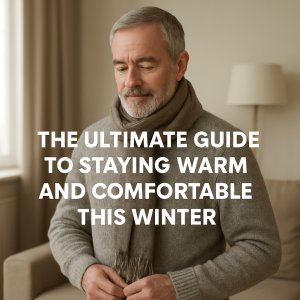 The Ultimate Guide to Staying Warm and Comfortable This Winter
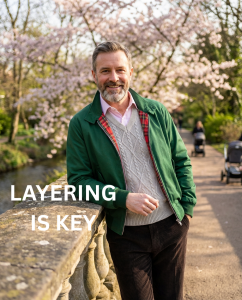 Welcome February: Layered Style as We Look Ahead to Spring
Leave a Reply
You must be logged in to post a comment.